
CHAPTER 2
The Beginning,
the Unf*ckwithable Phase
The first day being federally incarcerated felt like a stage dive.
Stripped of everything,
all I have now has been given to me —
from the too-tight,
government-issued bra
to the roll of toilet paper gifted
by my prison patron saint, Luciana.
The women offer small mercies to the new arrivals
— Rach and me.

Commissary won’t reopen for a week,
so even if we had money on our books,
we still wouldn’t be able to buy shampoo,
a toothbrush, or the insulated sippy cups everyone uses for water.

By the time Rachel and I finally arrived to the prison after a day of holding cells and transport, we were thirsty.
Mariella, extradited from Guatemala, offered her Styrofoam cup of murky liquid. We hesitated. She caught our look.
“No, no—water with a little apple juice.” She smiled.
It’s like that here:
Your instinct is to assume the worst, and then something kind—almost magical—cuts through.

It’s astonishing how a few words can dismantle an entire life.
It had been years living under federal investigation, months of motions, and weeks of trial—
all an inextricable flood that finally gathered enough force to dislodge me from my seat, earrings and necklace removed,
Fifteen years building the business, the community, the practice I was eventually indicted for.
and whisk me through a hidden door in the
courtroom wall into the underworld.
If the prosecutors get their way, this is the beginning of my next twenty years.
I’m fifty-seven. The door sealed behind us with a vacuumed sigh.
The most dramatic moment of my life was, for the officers, just another Tuesday.
Rachel—my co-defendant, my friend - looked at me. We were certainly somewhere new.
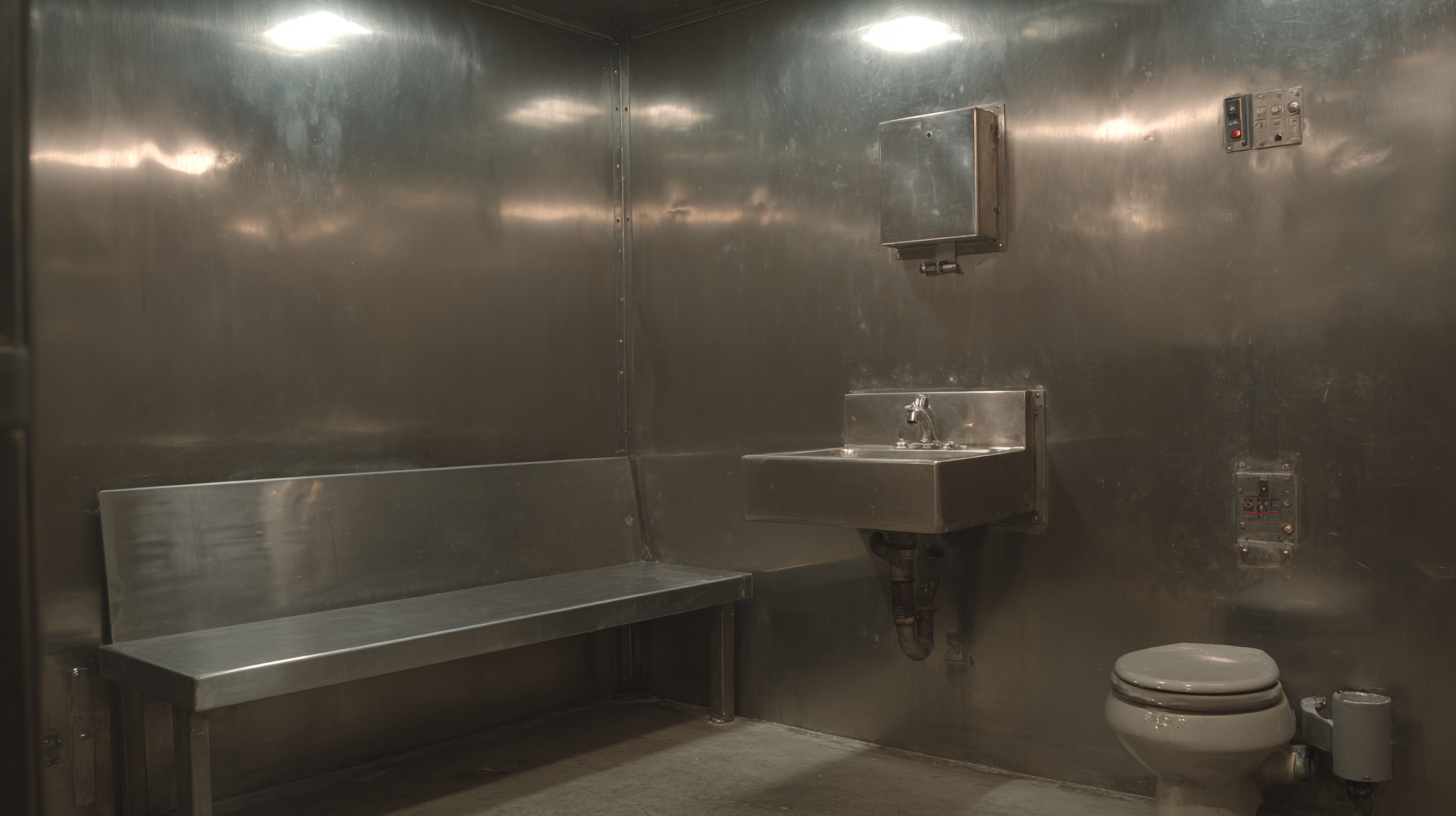
They placed us in a stainless-steel holding cell. Eventually we’d be put on a bus, but for now, we sat filling out forms.
Even here, relieved of our freedom, there was paperwork.
Then intake began - the ritual undoing

We undressed, stood naked, bent over, and coughed on command; our courtroom clothes replaced by federally issued beige.

My new underwear rose to my breasts; the bra slid up over them. The tan canvas pants could fit a linebacker, their cuffs swallowing the boat shoes that were a size too small for me, while Rach’s shoes were a size too large for her.
We looked like two children playing dress-up in our gangster fathers’ closets.
The absurdity made me laugh. It was funny, but it was also the point. Identity, dignity, free will—all stripped and replaced.

We were marched again and sat on another steel bench, still swimming in our oversized uniforms. Across from us sat a woman
who wore hers like silk.
Black hair to her waist, Salma Hayek eyes, the body of a gazelle. She sat as if holding court.
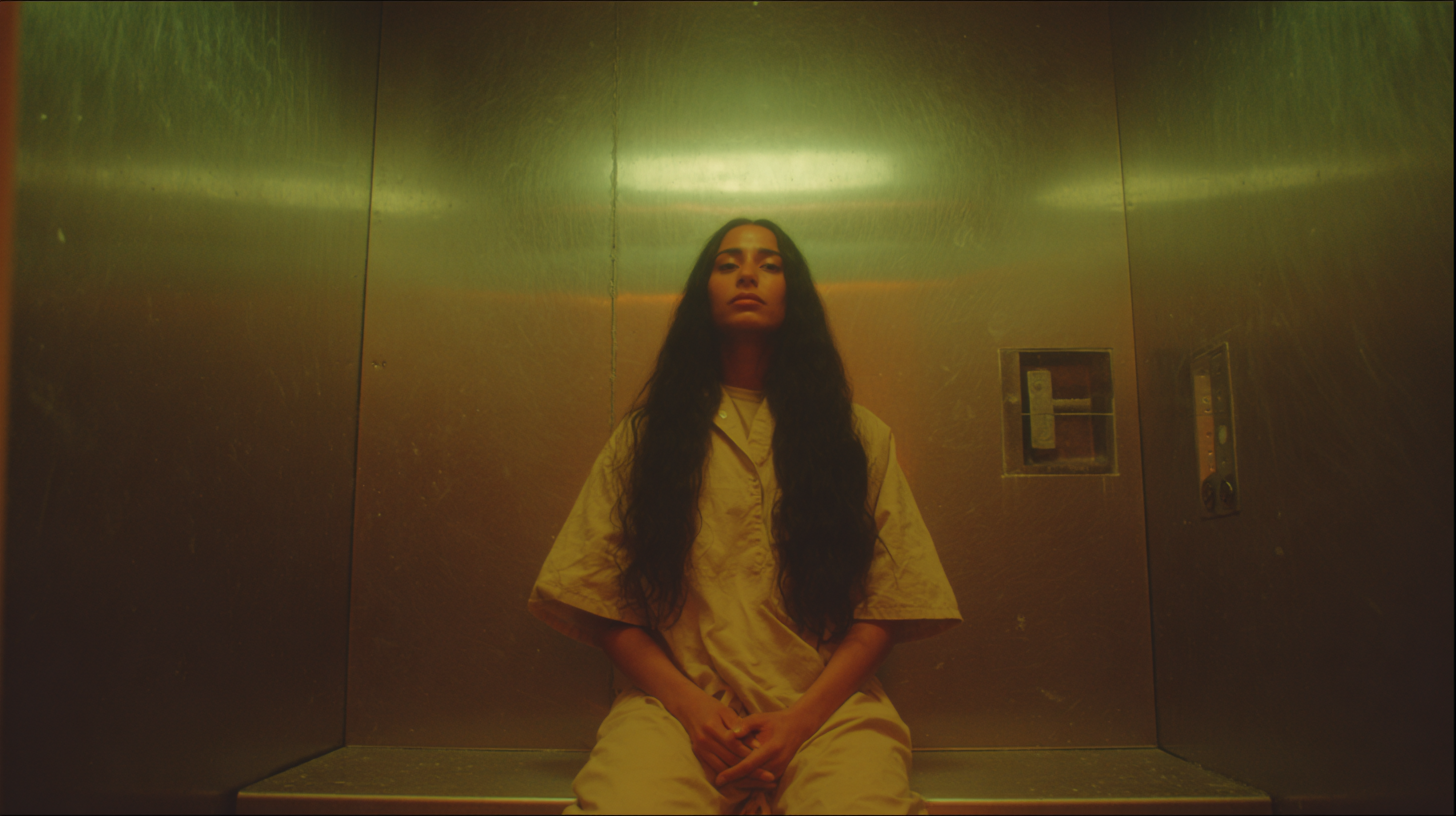
“My name is Mariella. Mari,” she said.
“I’m Nicole. This is Rachel,” I said, nodding toward Rach.
“You just arrived?”
“Yes. You…live here?” I wasn’t sure what the right verb was.
“Yes,” she said, neither proud nor ashamed.
“At MDC. They’ll probably bus us
over around five.”

I leaned forward, trying to get a sense of where we were headed.
“Is there a chapel?” She tilted her head.
“Well…kind of.”
“A gym?”
I’d read that exercise was the only way to avoid collapsing into despair.
“Kind of.” She smiled.
“Do you work? Do people have jobs?”
I was already imagining a library, maybe a teaching post.
“I clean the toilets.”
“That’s full-time?” She laughed.
”About an hour a day.”
My mind skimmed every prison blog I’d read.
“Do you get enough fiber?”
This time, she was really laughing.
“You’ll figure it out.”

It didn’t feel like the most auspicious moment of my life. I’d just been found guilty after a five-week trial, but I’d vowed not to get disheartened. To find the perfection inside the mess. My capacity, let’s just say, was being stretched.
Still, Mari felt like a wind from somewhere sane,
a trickster angel reminding me:
Things are not as they appear.
For years, that’s what I’d been teaching on the outside—that nothing is as it first seems, that the story we think we know is almost never the true one. Now, locked in a cell, life was asking if I really meant it. They shackled us.
It was time to move again through more cinderblock mazes painted in the same dull shade of disorientation.
It’s the same logic as putting a hood over a kidnapped person’s head and driving in circles: By the time you arrive, you have no idea where you are. Then the bus. A short ride from the courthouse. Oddly familiar sites blurred by metal grating and tinted glass. We drove down a street I’d walked the day before, a ghost passing through her old life.
As we got closer, the bus began to lurch over potholes before rolling through the metal gate.
Off the bus, into line, through another door. Each buzz and clank,
the apparatus ingesting us deeper into its gears.
Another strip search. Every instruction felt like a threat, designed to remove you from your dignity. But you only mind the status signifiers—bending over to cough, lining up like cattle—if you don’t know who you are. I watched the angular-faced guard with the cement chest deliver dehumanizing orders and felt a tenderness I didn’t expect. Everyone here was doing what it takes to make it through.
Rachel stayed close. Having each other was a small miracle. Finally, we stepped through a doorway and entered 3 North, the women’s dorm of the Metropolitan Detention Center, Brooklyn. Bubblegum-pink cinderblock walls. Institutional fluorescent lighting so harsh it blurred the edges of everything with a rainbow haze. The air tasted fake—like a casino with no clocks—and the scent of bad food lingered. I thought of a sign I’d once seen on meditation retreat: Unconditional freedom is freedom in all conditions.
Enter Luciana. Picture two bougie white women dressed like Cholas, blinking in the light—then a hot Latina with pre-Raphaelite curls, brown anime eyes, and an ass that announces itself. She bounced toward us like she’d been waiting all day. “You’re new,” she said. “You’ll sleep in my row. Two beds just opened up!” We dug through the dark storage room for our so-called mattresses, then followed her back. She showed us how to tuck the thin sheets, then pressed toilet paper rolls into our hands like party favors. “Don’t worry,” she said. “Prison is what you make it. Personally, I’m the woman I am because I came here.” She’d read Viktor Frankl. She compared herself to concentration-camp survivors: They had no food or shoes. We have everything.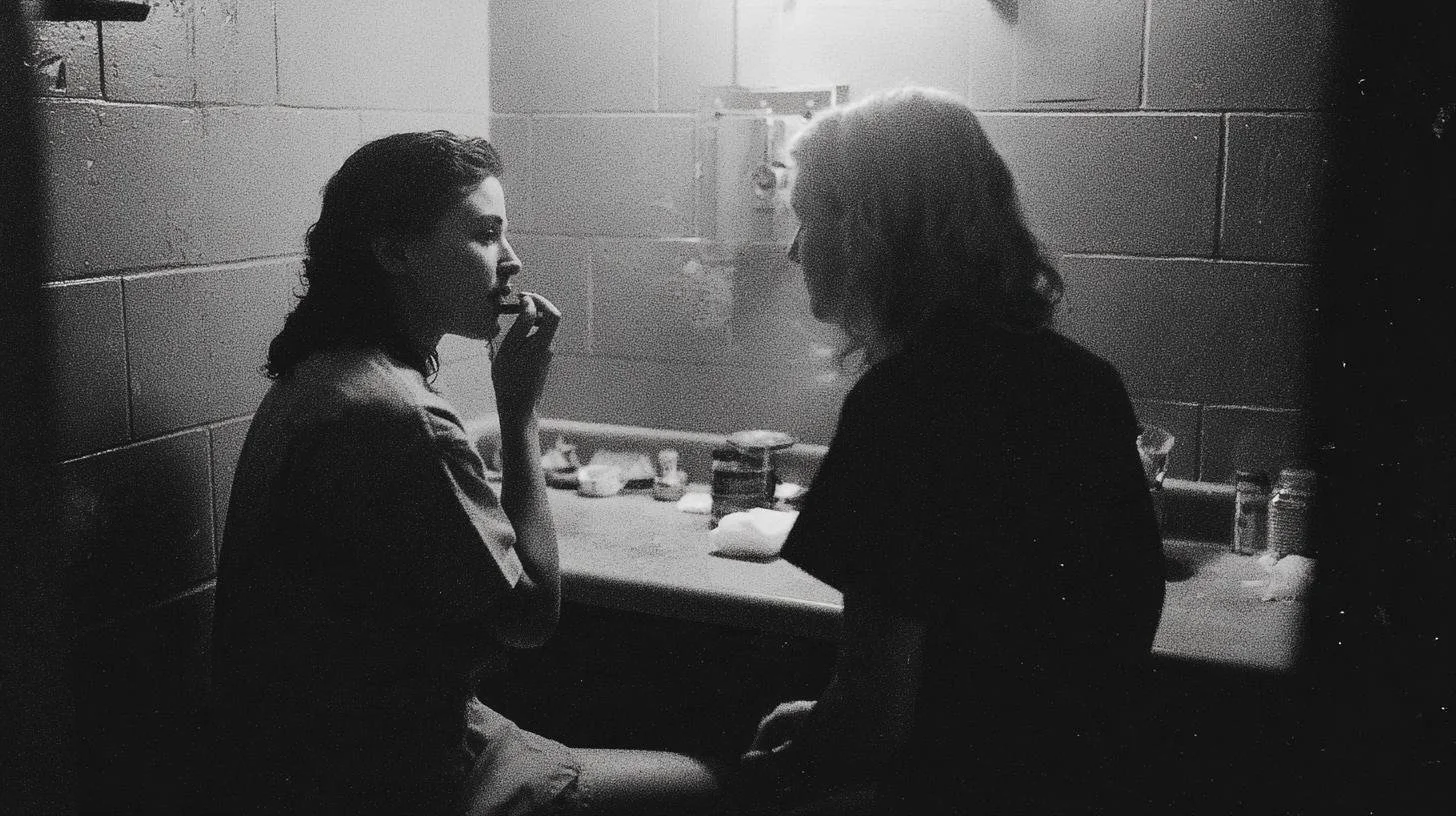
She bragged about commissary sushi and her DIY face cream -- vitamin-E oil mixed with preparation H. “You’ll eat well and stay wrinkle-free.” She grinned. The absurd. The kind. The useful. “And this is Nevaeh,” Luciana introduced us to another member of our row of bunks. “She’s going home soon.” 
Nevaeh was a Black woman with the timing of a comedian and the poise of a church matriarch. Her father had given her the name “Heaven” backwards, so she’d never have to be far from the Lord. Nevaeh grew up in the church and knew scripture like her own hand. Later, I’d see her holding Bible study on her bunk, two over from mine. But for someone that angelic, she also had a wicked sense of humor. Fast on the draw, key on the insight. “MDC is just holding,” Nevaeh explained, matter-of-fact. “After sentencing, they ship you where you’ll serve.”She listed the options like a college counselor: Danbury’s nice, Alderson has a salad bar, Philly has rats, Tallahassee’s okay. It helped to hear there were differences, even inside the choiceless. We asked the practical questions: Hair dye? No. Pillows? Contraband. Food? Expect bloating and weight gain. She squinted at me as our list of questions began to slow, her curiosity growing. “So what they got you in here for, anyway?” she asked. There’s no short version of my case, but I gave her the bones: that I’d spent the last twenty years teaching a practice that treated women’s desire as something sacred instead of shameful; that the government had decided to call that a crime.
I told her I still believed the same thing I’d believed on the outside—that if you have a steady inner signal, nbody can run your life for you. Not a boyfriend, not a boss, not a judge, not this place.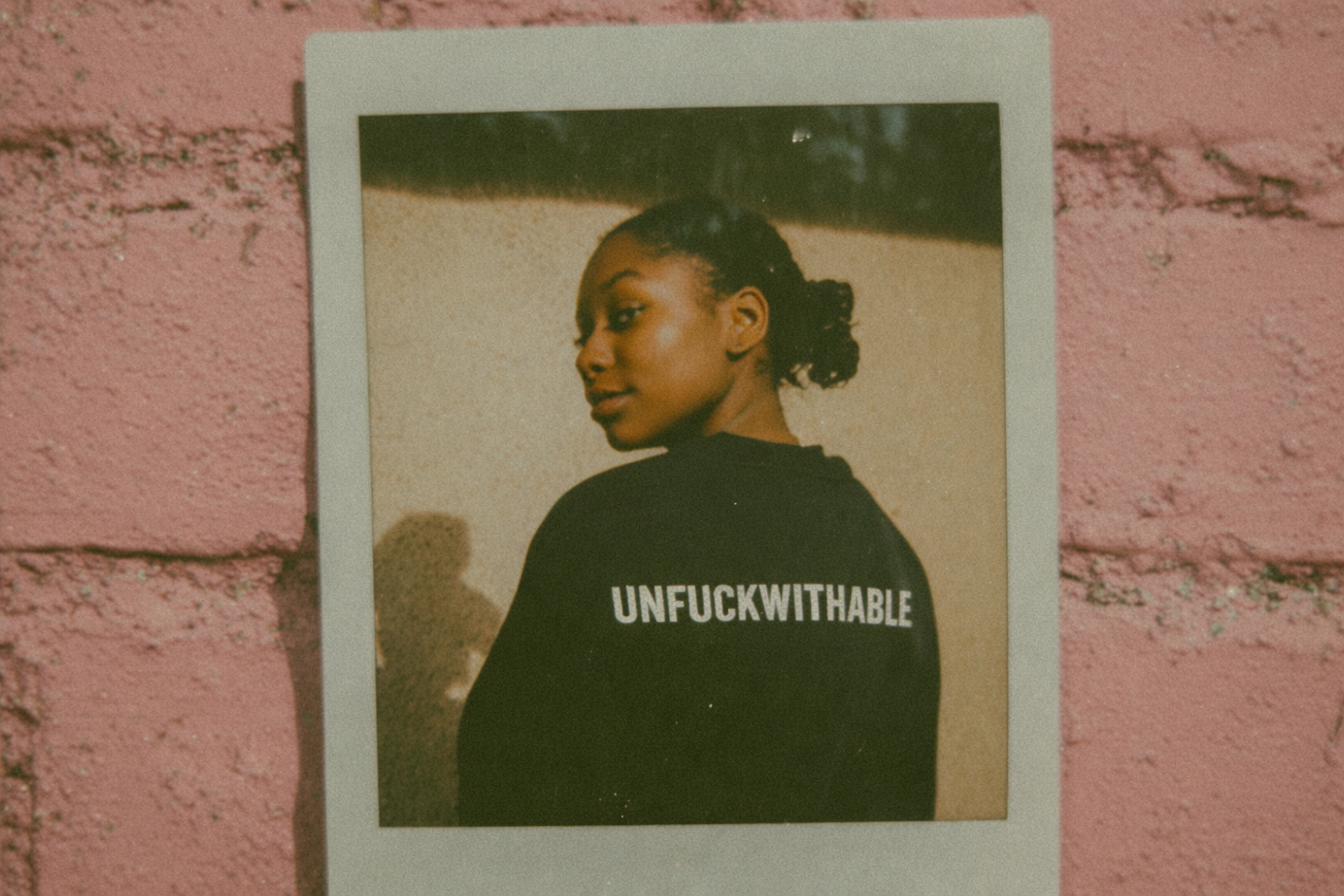
“Not hard or mean,” I explained. “Inner freedom—no matter what the institution throws at you, you can’t be shaken from who you are. I want women to be unfuckwithable.” “Girl!” Nevaeh perked up suddenly. “Oh man, that’s my word! You gotta see…” She looked up, scanning across the mass of photos she had stuck to the bottom of her upper bunk, a constellation of life outside these walls. “There it is,” she said, pulling out a photograph from the corner. It was a picture of herself wearing a sweatshirt, arms crossed, and written down the sleeve in bold white text was the word: “UNFUCKWITHABLE.”


It was powerful to see these different sides of her. She’d gone from advisor to us newcomers in here to untamed hottie out there in an instant. She was more than could be captured in a single story. I could tell that these were not women who could be fit into a box and labeled, as much as this system might want to. I heard a quiet voice inside myself, in the midst of a day like none I’d had before, orienting me toward seeing these women as they truly are.
Later, on recall—a part of my new daily schedule when everyone is required to stand in a certain area of the dorm, by the bunks, behind a blue line on the floor—Nevaeh’s voice dropped low as she told me more. How she was close to going home. How this time she wanted to do it different—no circling back, no “catching a new case.” She wanted to serve the same women she’d done time with.The shield dropped for a moment, and beneath the prison-slick exterior was something riskier: hope. Her hushed tone conveyed the sense that she was sharing contraband. I had the sense that in prison you’re always one disappointment away from deciding never to feel it again. They skipped suicide watch for us, which is two days of solitary confinement in the “Special Housing Unit,” standard procedure for new arrivals and also the place women go if they break rules, step too far out of line, or get one too many warnings about their behavior. Maybe they thought we’d weather it. Maybe after years of practice, we were built for this. Everywhere can be home if you know where to place your attention.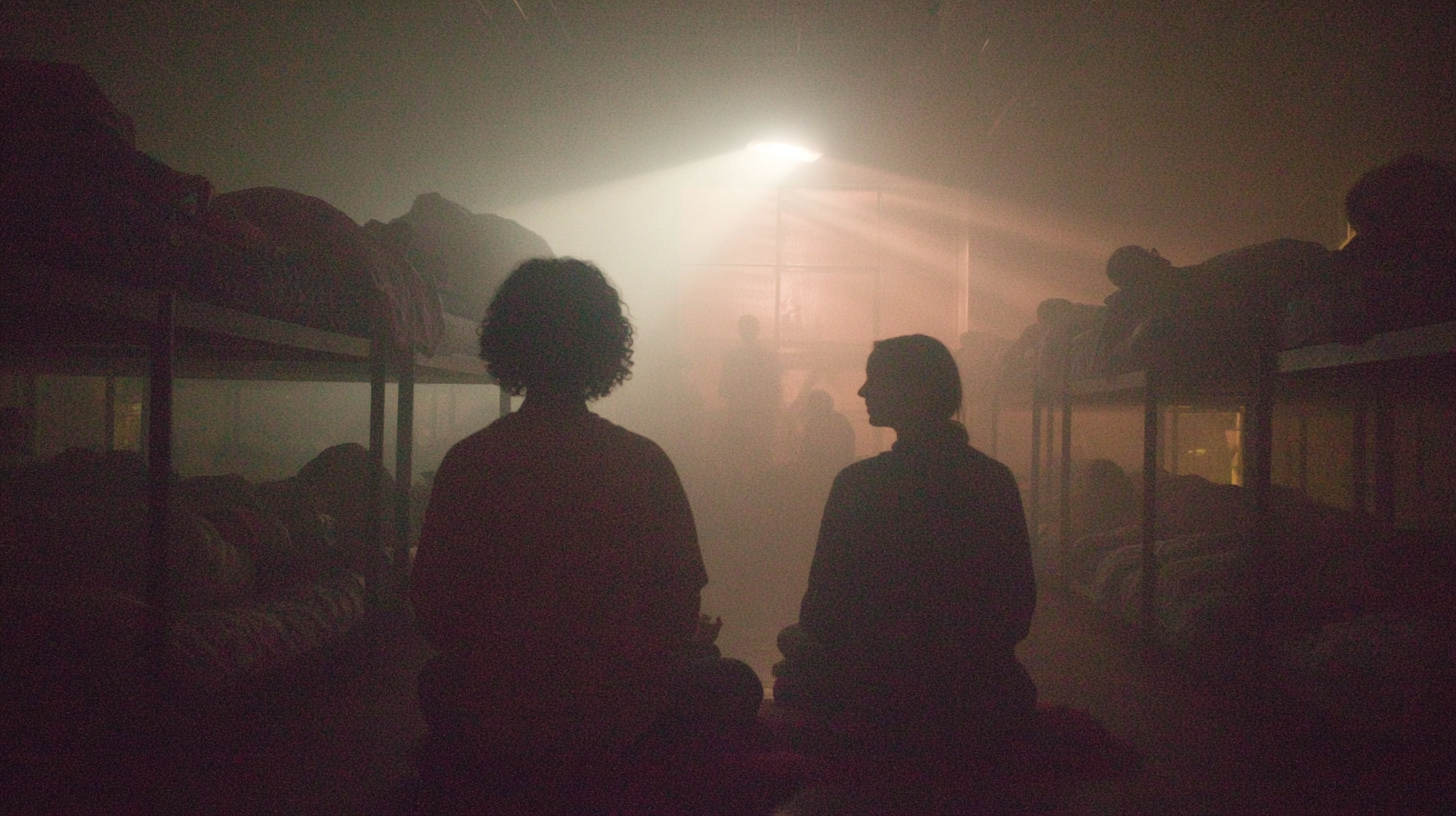
I slept like a baby, and at 4:30 a.m., I woke up clear. The dorm hummed—fans, the TVs now silent, the white noise of forty women dreaming under indoor daylight. Rachel and I did a little yoga and a mini meditation in front of the only open window. She asked if I had regrets. It wasn’t the usual prison question—not what wrong steps I’d taken or how I’d fallen in with the wrong crowd.

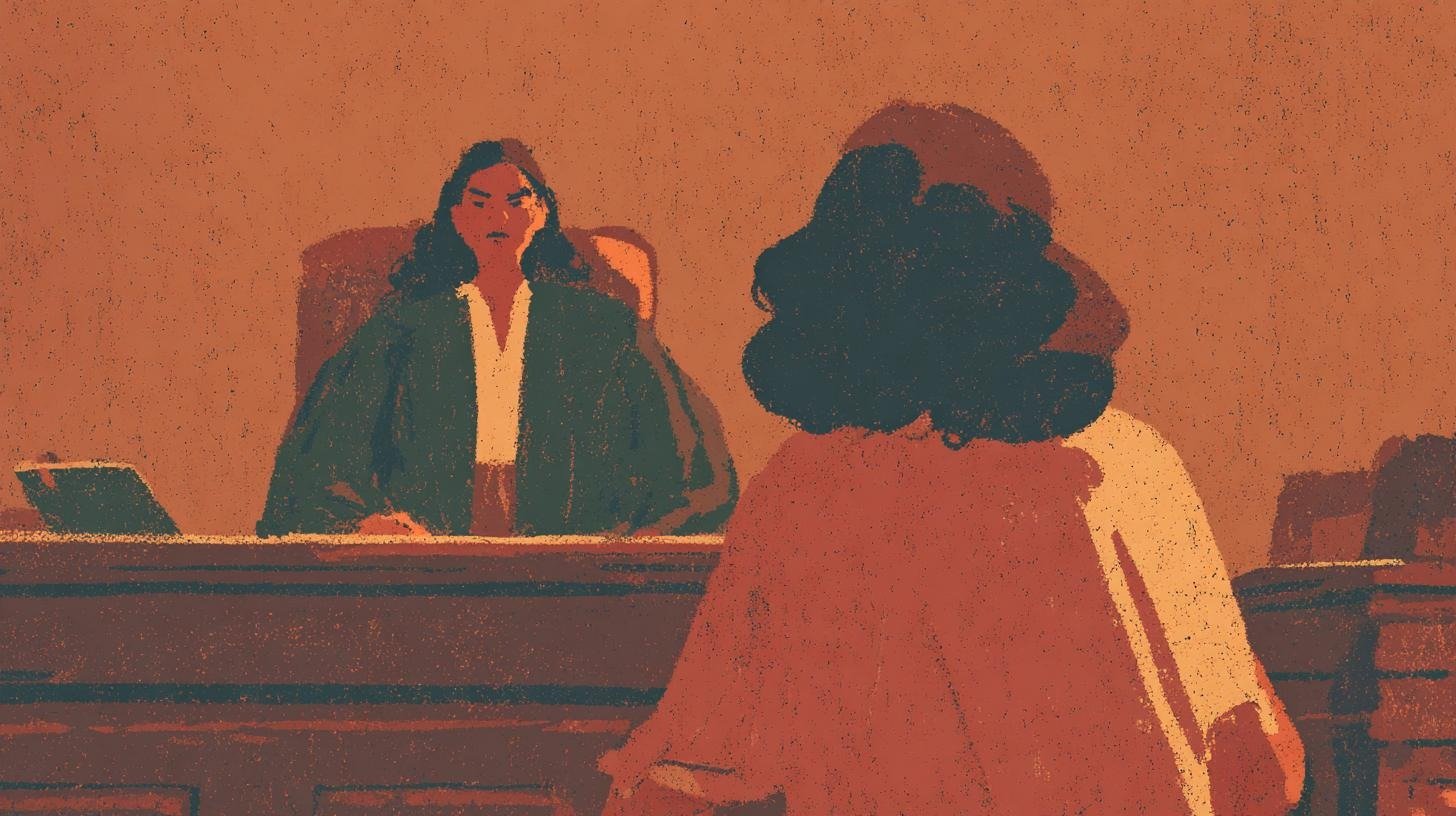
I knew what she meant: Do you regret the promise you made, the mission you took on, now that you know what it costs? “Not at all,” I said. It’s easy to tell the truth when you’re living your worst-case scenario and still feel peace. I knew what I was taking on. I knew my work collided with the story society tells about women and sex, and I walked into that collision with my eyes open. If the worst consequence is time in prison, and the work we did turned a cultural tide, that’s worth it.
I knew what she meant: Do you regret the promise you made, the mission you took on, now that you know what it costs? “Not at all,” I said. It’s easy to tell the truth when you’re living your worst-case scenario and still feel peace. I knew what I was taking on. I knew my work collided with the story society tells about women and sex, and I walked into that collision with my eyes open. If the worst consequence is time in prison, and the work we did turned a cultural tide, that’s worth it.
They hide the cost in the fine print. We talked about our friends on the outside and hoped they could be happy, as apart from us as we were from them. I thought of the Tibetan monk who learned to walk through the walls of a prison camp to go meditate in his cave. I understood the impulse.
My Zen priest friend Ed loves reading poems. One of my favorites begins: “Last night as I was sleeping, I dreamt—marvelous error!”
I love that line. The accidental miracle of being alive in this exact, impossible moment—the beauty hidden in catastrophe. Every disaster, a doorway. And so, at 5:30 a.m., my first morning in prison, first prison yoga and meditation complete, Rachel beside me, the fluorescent convent humming, I saw it. The noise, the ugliness, the discarded—all of it transformed. I turned to Rach beside me. “Rach, you see that?” I whispered. Her head nodded slowly, quietly in awe. Hallowed. We made it.