CHAPTER 4
Janiya
This one might be beyond my pay grade, ran through my mind, as the Black girl with cornrows and no comprehension of indoor volume twerked her way past my bunk, fast-talking to Luciana.
“I fuckin’ love watches. I just love ’em.”
I poke my head out from under my “eye mask,” which is really just a
sweatshirt, to see Rachel doing the same from her bunk two down.
“Good for you,”
Luciana says, in perfect prison-etiquette language.
Translation: Get out of my row. I don’t want any problems.
“Yeah, you know me, I’m a ho—but not a cheap ho. I need them watches.”
This is a new category of ho for me.
Not a shoe ho. Not a bag ho.
A watch ho. A Rolex ho.
“Okay, thank you for letting us know,”
Luciana says in the exact tone of someone politely closing the door on a religious pamphlet they did not request.
I could take a page out of this woman’s book.
Janiya is completely unfazed by Luciana’s please evaporate energy.
If anything, she’s more energized now that she’s picked up two extra spectators.
She’s moved on to karaoke twerking,
shimmying through movie soundtracks
and landing on Grease.
She looks my way. “You know that one?”
I glance to either side as if to ask, Are you talking to me? Yes. She is talking to me.
“I do,” I say, and somehow manage to sound like a 1950s librarian answering a reference question.
“I do that one for my baby, my son,” she says. “People tell me to leave his daddy, but I ain’t goin’ nowhere.”
Within three minutes of meeting her, I know more about her love life than I know about some of my closest friends on the outside. Most people reveal this level of detail somewhere around week twelve of therapy. Janiya offers it before I have fully sat up in bed. Now, I might be reserved, but I marvel at the sheer social athleticism of it all. Can you really wake up a stranger with your ass in motion, not know their name, and then slide right into the kind of confession most people save for a locked diary? If you’re Janiya, you can. And if you’re Janiya, you can also make a white woman in the early days of her prison stay fall completely in love with you, even when she wakes you up in the middle of the night. She is, for many, an acquired taste. I lived with a Janiya-adjacent personality for years on the outside, so I take to her quickly. Well. In fifteen minutes.You know those cartoons where the brain and the heart talk to each other?
The heart holds the brain’s hair back while it leans over the toilet, throwing up bad thoughts. That’s the dynamic here.
Janiya is the heart.
Everyone around her is forced into the role of the brain.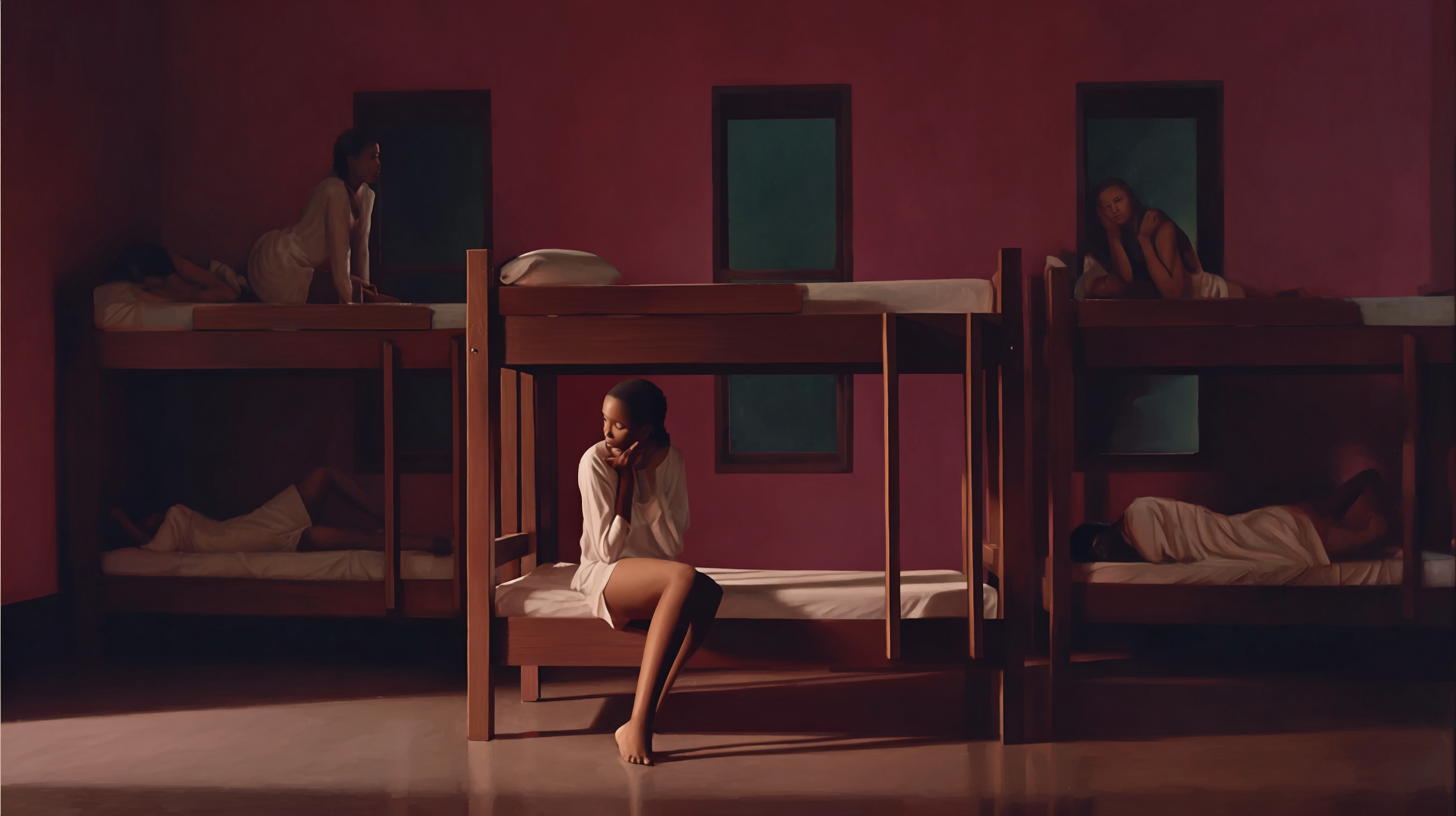
Her favorite “brain” is Nevaeh.
Another day, another…
Twerk, twerk, twerk—
down our aisle she comes.
“Wake up,” she announces, planting herself by Nevaeh’s bunk. “I cooked lunch.”Nevaeh, who is very much not at the Loving-Janiya stage, groans and pulls the covers higher.“I don’t like your food,” she mumbles.Me? If I cook for you and you don’t go back for thirds, I spiral into a crisis about my life’s purpose. Janiya? Totally unbothered.“Your loss,” she says, and sashays away, hummingEven in those first few days, I started to notice something about Janiya: She never stays down.
She might get loud, get checked, get on people’s last nerve, but she always pops back up with the same irrepressible gleam.
There’s an innocence to her joy that people mistake for ignorance.
They think it must be easy to live like that— loud, shiny, unapologetic. It isn’t.Everyone thinks joy is simple until they try it.
So simple, in fact, that they don’t bother to try it
but then judge the ones who do.
One afternoon I’m sitting with my plastic mug of lukewarm coffee, watching Janiya orbit the dorm.
She is in rare form, running commentary on the TV, hyping up a spades game, stopping mid-aisle to show off a new hairstyle she has given herself with nothing but gel, a toothbrush, and determination.

The saviors start circling.
“Girl, you gotta calm down,” one woman tells her. “You need to think about your future.”“You gotta stop playin’ all the time,” another adds. “You in federal prison.”They mean well. They usually do. They tell her she needs to get
serious, start planning. Their faces hold that particular blend of
concern and superiority reserved for women who have decided they
know what your rehabilitation should look like.Janiya cycles through her options like wardrobe changes: grateful student, apologetic child, bored parishioner.
“Yes, ma’am.”
“You right.”
“I hear you.”
We lock eyes for a second and I send the silent message:
You are very good at what you do.
Because what she does is let people believe they’ve tamed her. It soothes them. They feel useful. She gets to keep being herself.

What I love is how expertly she refuses to be pinned down. She’s far more sophisticated than anyone gives her credit for.

Luciana, for one, is often somewhere between exasperated and homicidal.
“She reminds me of this Buddhist line,
‘tricksters and bandits of the dharma,’”
I tell Luciana.
In spiritual circles, the dharma is the truth of how things actually work, beneath the surface drama. Tricksters and bandits are the ones who refuse to let that truth be shrink-wrapped into something safe and beige. They stay a step sideways from the rules, not because they’re shallow, but because they’re protecting something alive.To actually change a world that wants to iron out every edge and turn everyone into the same polite, powerless citizen, someone has to move like the coyote. Leonard Cohen was once asked what the most powerful role for a Zen teacher was. His answer was “trickster.” You have to fool the ego out of itself. Even the noblest idea, once it gets fused with ego, will drive you straight into suffering. Sometimes the thing that looks terrible from the outside is actually the medicine. I tease Luciana that maybe, just maybe, Janiya is a better trickster
than both of us put together.
The heart usually is.Janiya lives in the bunk that borders the dining area,
the “front bunks.” It’s like living in the median of a freeway.
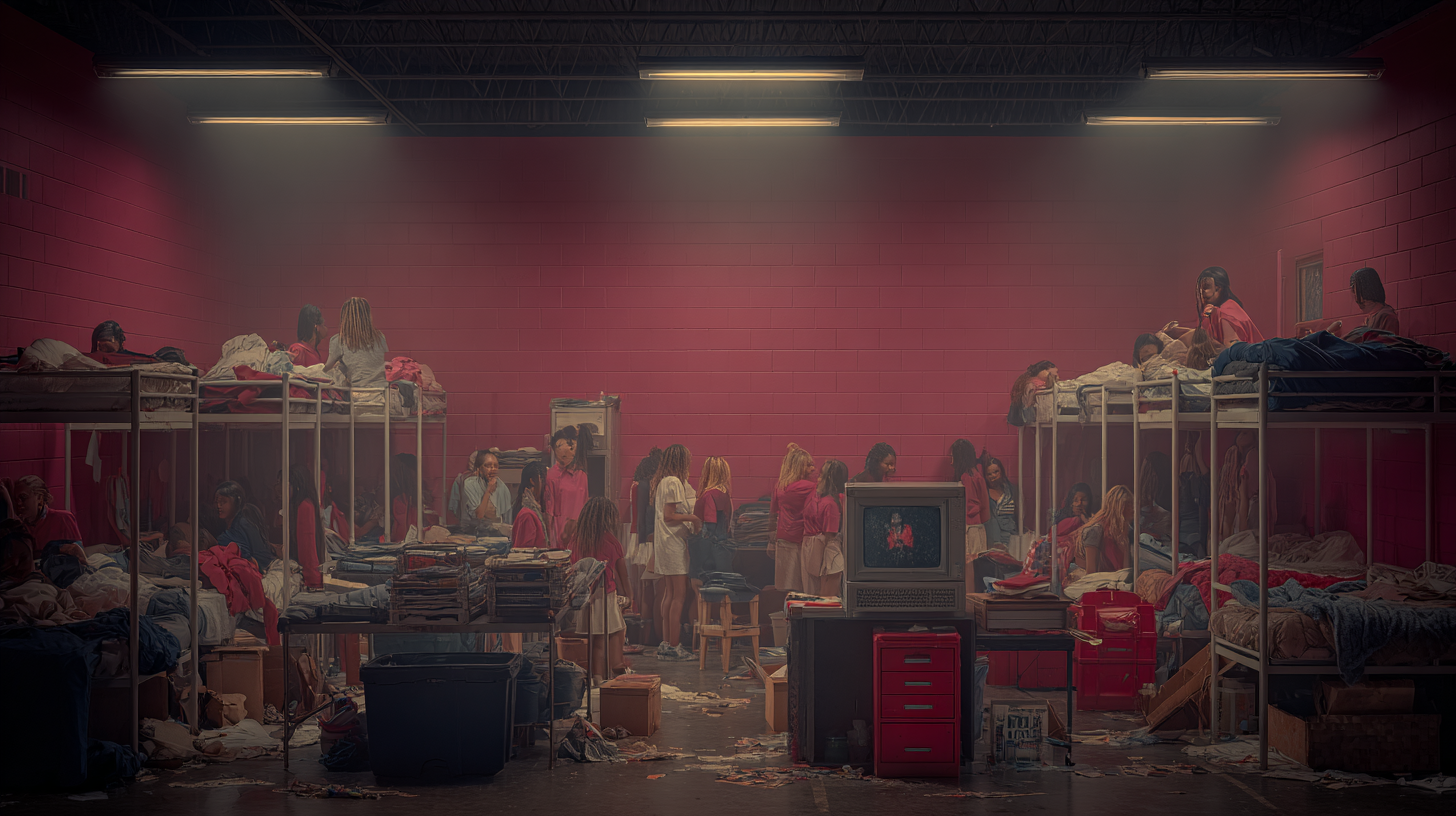
To say that Janiya’s bunk is a mess is an understatement.

You know that house on the block with three dead cars in the yard from ten years ago, a Christmas tree still up in April, and so much stuff inside that it starts spilling onto the porch? The one you suspect will one day be on a reality show where someone in a hazmat suit and yellow gloves comes to clean?
That’s her area.She can absorb the reprimands. I cannot. Something about watching her get scolded turns my stomach.I walk over and sit on the edge of her bunk.“Do you want Rachel and me
to help you clean your area?” I ask.
You would think I had offered her a fully comped cruise. She leapsup and does an entire dance routine.“When?” she demands.“How about tomorrow at noon?”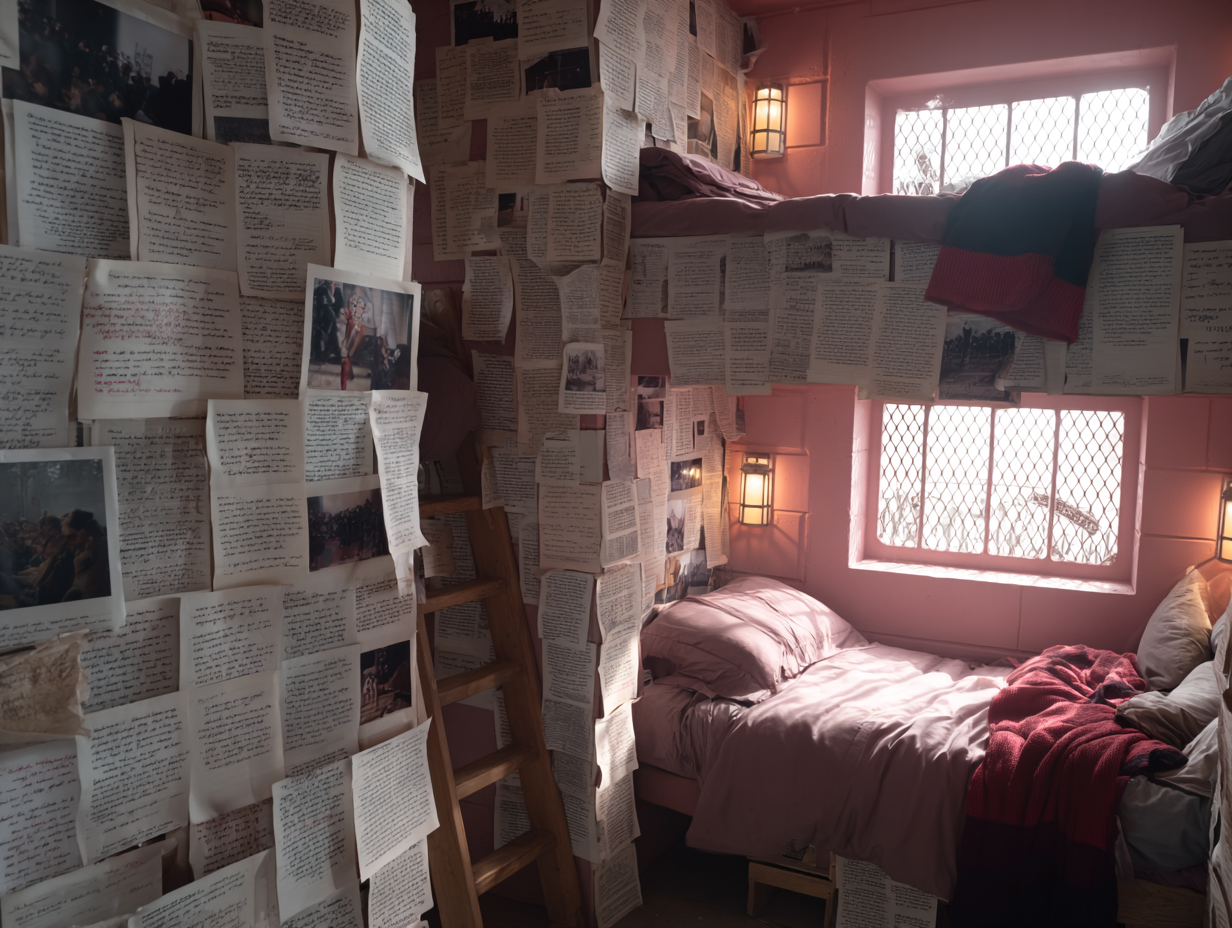
Noon rolls around. No Janiya.


I assume she has forgotten or changed her mind. Then the bathroom door swings open.
“I’m ready, ladies!” she calls, beaming and strutting toward her bunk.“We thought maybe you didn’t really want to,” I said, offering her a way out if she’d like to take it.“No way I was missing this,” she answers, a full grin across her face.
We get to work. We do not, in fact, throw away her overflowing stash of plastic spoons. We box them.“The institution ran out of spoons once,” she reminds us. “Girl, that was not pretty.”Mostly, she sits and pulls out photographs, old letters, little folded notes that once came tucked into commissary bags. She reads some aloud, sings along to half-remembered songs from the radio, tells us who is who in each picture. Rachel and I scrub and sort and fold and stack while she narrates.There’s a sweetness to it that I didn’t expect, a softness about her I hadn’t noticed. She is letting us into her world the way she can, and the way we can receive it: side by side, hands busy, past and present spread out on thin prison sheets.
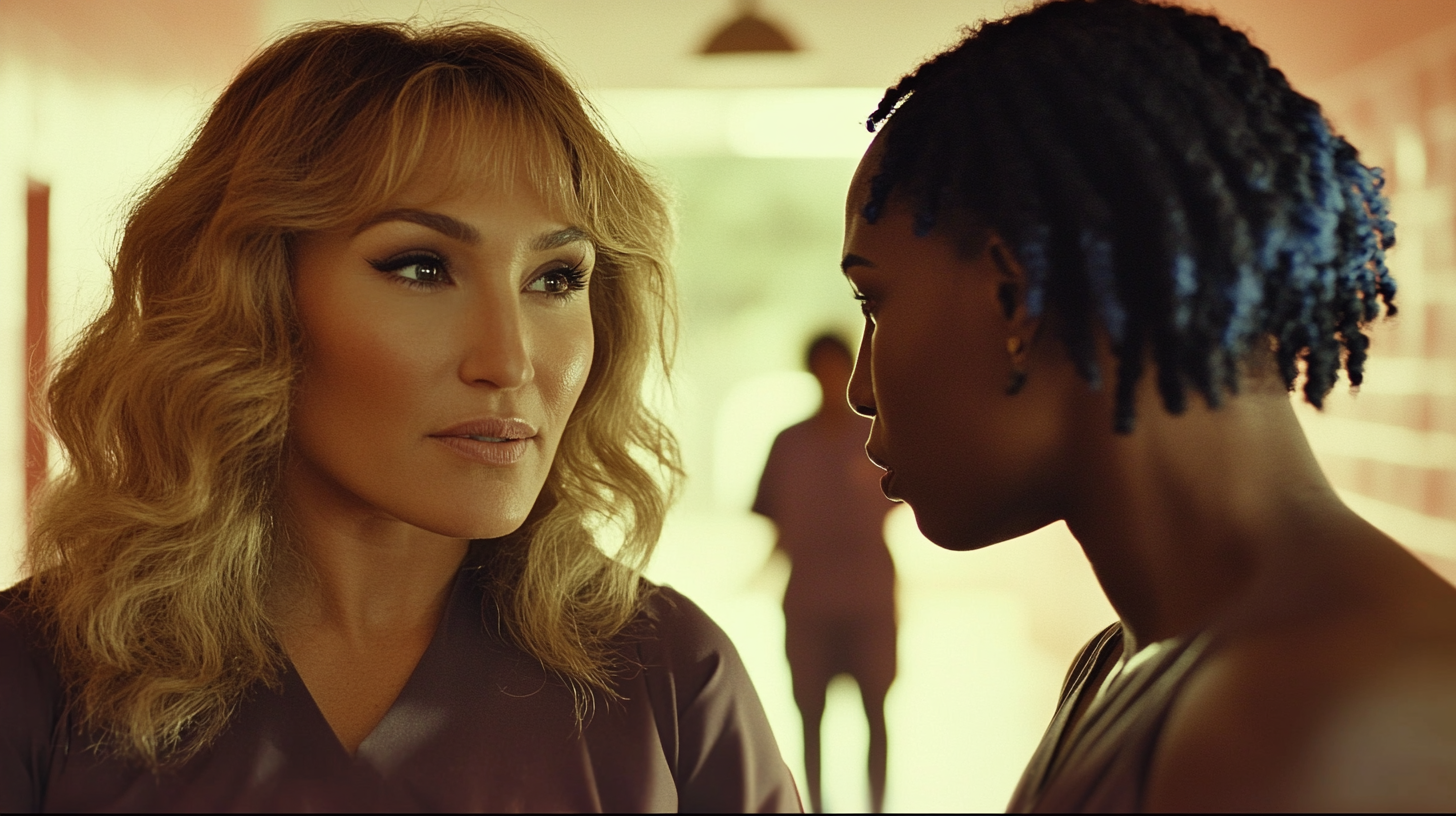
That night, Janiya slides into a metal chair across from me without asking. For once, she’s quiet.
“No one’s ever really liked me for real,” she says, picking at the peeling edge of the table. “They like the show. They like what I do for ’em. But me?” She shakes her head. “I don’t know if people even see me.” As she talks, it’s as if she is removing masks that she wears. I see a wise woman underneath.“Wait a minute,” I say. “This is you. This is who is in there.”She smiles. “You knew that, didn’t you?”“Yes. But one can never be sure.”For a minute, we’re two women from the same weird spiritual army, both undercover. I let her see me, too, underneath my own costume:the naïve first-timer, the middle-aged white woman they tease for being out of place, the teacher trying not to teach.“Bitch, I knew who you were,” she says finally, and the spark comes back into her eyes. “Soon as you walked in here.”We both crack up. Some kind of soul recognition—when you spot the same flame in someone else.
On the outside, years ago, I brought my street-clothes rabbi to meet my Orthodox rabbi at a Torah study.When I introduced them, the Orthodox rabbi said, “Hello, Rabbi,” like it was obvious. Later I asked how he knew.He rolled his eyes. “Please.” Same principle. Different costumes.“Don’t tell nobody, though,” Janiya says, leaning back.
“Let them figure it out.”“Janiya, even if I told them, they wouldn’t believe me,” I say.“Remember, I’m the naïve one.”She grins and gets up, mask sliding back into place as easily as lip gloss. A second later, she’s at Nevaeh’s bunk again, stirring the pot, making jokes, ignoring the volleys of “girl, shut up!” that greet her. And before long, the whole row is laughing. Even the ones who swear they cannot stand her can’t hold back their smiles.
One of my favorite books is The Book of Laughter and Forgetting by Milan Kundera.


The title alone has always felt like a teaching.
Laughter and forgetting arrive together.
Myth says laughter gives the mind wings; it lets us lift off the ground of our lives for a moment.Angel’s wings, dakini’s flight. It doesn’t erase what hurts, but it loosens its grip. It makes a little space.In a place like this, space is everything.
When the officers walk through, they see a loud girl who doesn’t know when to stop. A problem. A disruption. A write-up waiting to happen.
What I see of Janiya is a kind of jailhouse jester. The trickster in lashes and cornrows. The Rolex ho with the wide-open heart. The one who chooses, over and over, to risk being ridiculous rather than let any of us sink completely into the silence.She’s not here to be nice. She’s here to make sure we’re still alive.